Industrial heat Exchanger About
An industrial heat exchanger specification typically defines the design, performance, materials, operating conditions, and applicable standards for the equipment. Below is a general specification template that can be adapted for most industries.
Industrial Heat Exchanger Specification
1. General Information
- Equipment: Heat Exchanger
- Type: Shell & Tube / Plate / Air-Cooled / Double Pipe
- Service: Process Fluid Cooling/Heating
- Quantity: 1
- Tag Number: HX-101
2. Design Conditions
| Parameter |
Shell Side |
Tube Side |
| Fluid |
Hot Process Fluid |
Cooling Water |
| Flow Rate |
20,000 kg/h |
25,000 kg/h |
| Inlet Temperature |
150C |
30C |
| Outlet Temperature |
90C |
45C |
| Design Pressure |
16 bar |
10 bar |
| Design Temperature |
200C |
100C |
| Operating Pressure |
12 bar |
6 bar |
3. Thermal Design
- Heat Duty: 1.2 MW
- Overall Heat Transfer Coefficient: As per thermal design
- Log Mean Temperature Difference (LMTD): Calculated
- Fouling Factor:
- Shell side: 0.0002 mK/W
- Tube side: 0.0001 mK/W
4. Mechanical Design
- Exchanger Type: Shell & Tube
- TEMA Type: AES (or as required)
- Shell Diameter: As per design
- Tube Length: 36 m
- Tube Outside Diameter: 19.05 mm (3/4 in)
- Tube Thickness: 1.65 mm
- Number of Tubes: As required
- Tube Pitch: Triangular/Square
- Number of Tube Passes: 2
- Shell Passes: 1
- Baffle Type: Single Segmental
- Baffle Spacing: 2050% of shell diameter
5. Materials of Construction
| Component |
Material |
| Shell |
Carbon Steel ASTM A516 Gr.70 |
| Tubes |
Stainless Steel 316L |
| Tube Sheet |
Carbon Steel with SS Cladding |
| Channel |
Carbon Steel |
| Gaskets |
Spiral Wound SS/Graphite |
| Bolting |
ASTM A193 B7 / A194 2H |
6. Connections
- Shell Inlet/Outlet: Flanged, ANSI Class 150/300
- Tube Inlet/Outlet: Flanged
- Vent Connection
- Drain Connection
- Thermowell Connection
- Pressure Gauge Connection
7. Codes and Standards
- ASME Section VIII Div. 1
- TEMA Standards
- API 660 (for shell-and-tube exchangers in refinery service)
- ASME B16.5 (Flanges)
- ASTM Material Standards
8. Inspection and Testing
- Hydrostatic Test
- Pneumatic Leak Test (if required)
- Non-Destructive Testing (RT, UT, PT, MT as applicable)
- Material Test Certificates
- Positive Material Identification (PMI), if specified
9. Surface Protection
- Internal Coating: As required
- External Painting: Epoxy primer and polyurethane topcoat
- Insulation: Mineral wool or calcium silicate (if required)
10. Documentation
- General Arrangement Drawing
- Mechanical Data Sheet
- Thermal Design Calculation
- Fabrication Drawings
- Welding Procedure Specifications (WPS/PQR)
- Inspection and Test Plan (ITP)
- Material Certificates
- Operation & Maintenance Manual
11. Performance Guarantee
- Heat duty as specified
- Maximum allowable pressure drop
- Leak-free operation
- Design life: Typically 20 years (subject to service conditions)
This template can be tailored for specific applications such as power plants, oil and gas, chemical processing, HVAC, food processing, or pharmaceutical industries by adjusting the design conditions, materials, standards, and performance requirements.
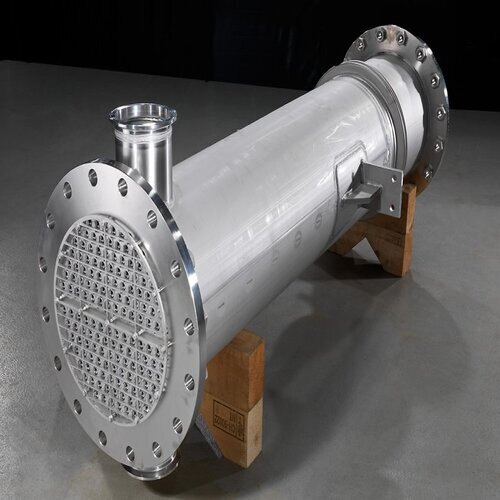
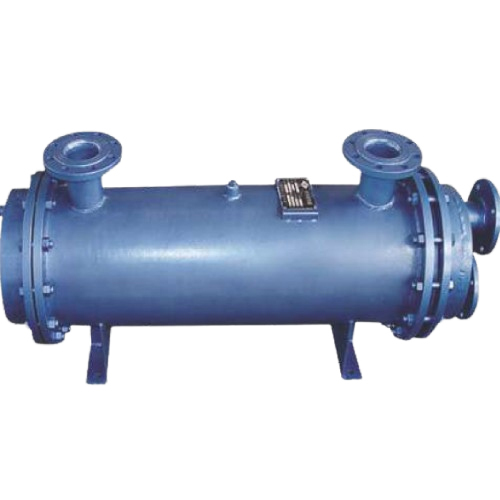
Superior Build and High PerformanceCrafted from corrosion-resistant Stainless Steel 304/316, this heat exchanger guarantees prolonged operational life and reliable performance, even in aggressive industrial settings. The shell-and-tube design supports excellent heat transfer, making it a preferred choice for a diverse range of applications.
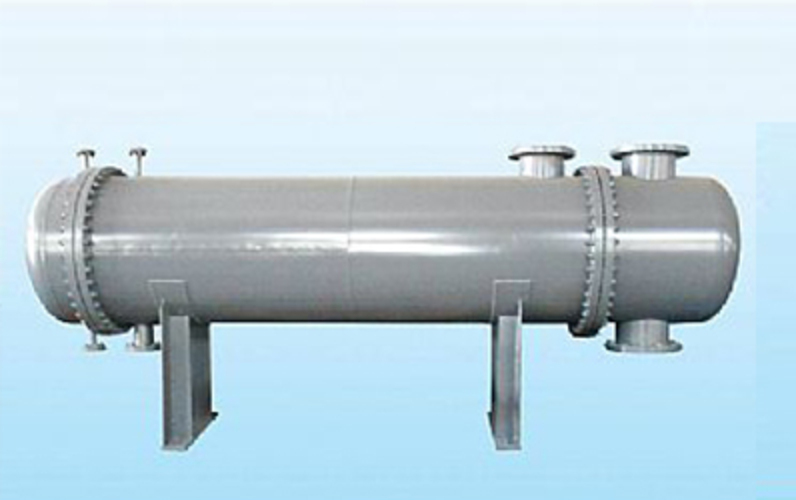
Customizable for Diverse RequirementsAvailable with customizable dimensions and features, this shell and tube heat exchanger caters to varying process needs. The floor-mounted, horizontally oriented unit with flanged end connections ensures easy integration and installation in existing systems.
Low Maintenance, High EfficiencyThanks to its high-quality polished stainless steel construction and precision engineering, the unit offers minimal maintenance requirements, reducing plant downtime and operational costs. Its design promotes energy efficiency and consistent temperature control.
FAQ's of Industrial heat Exchanger:
Q: How does the stainless steel shell and tube heat exchanger benefit industrial processes?
A: The stainless steel shell and tube heat exchanger efficiently transfers heat between fluids, ensuring stable process temperatures. Its high corrosion resistance and robust construction make it suitable for demanding industries, resulting in increased operational reliability and reduced long-term maintenance costs.
Q: What applications are suited for this heat exchanger model?
A: This heat exchanger is ideal for industries such as chemical processing, food and beverage, pharmaceuticals, and power generation, where high pressure, efficient heat transfer, and resistance to corrosion are critical. Its design supports safe and effective operation even with aggressive or high-temperature fluids.
Q: When is maintenance required for this heat exchanger, and what does it involve?
A: Routine inspection and cleaning are recommended based on usage intensity and the nature of process fluids. Due to its smooth polished surfaces and low-maintenance design, usual servicing involves checking for fouling on tubes and ensuring secure end connections, minimizing plant downtime.
Q: Where can this heat exchanger be installed within an industrial facility?
A: With its horizontal orientation and floor-mounted design, this exchanger is best installed in locations allowing adequate clearance for tube access, maintenance, and inspection. Its flanged end connections make integration into existing piping systems convenient.
Q: What is the process for customizing this heat exchanger to specific requirements?
A: Customization involves specifying preferred dimensions, tube arrangements, and connection types based on a facility's process parameters. The manufacturer in India works closely with clients to design and fabricate units tailored to their application for optimal efficiency.
Q: How does the tube material and structure enhance the performance and lifespan of the unit?
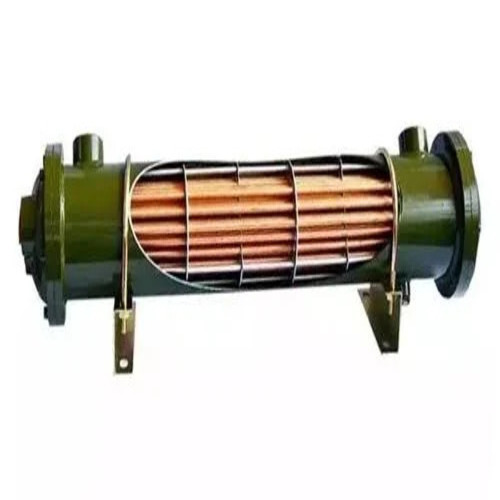
A: Constructed with high-grade stainless steel tubes, the exchanger ensures excellent thermal conductivity, superior corrosion resistance, and mechanical strength. The shell-and-tube configuration allows for efficient heat transfer and easy cleaning, extending operational lifespan.
 08045815056
 GST: 33BGTPS0823H1Z7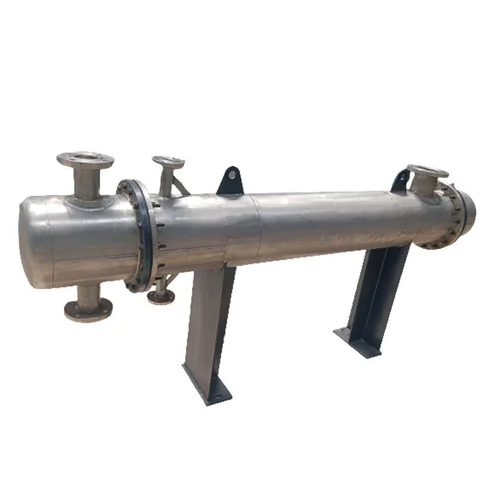

 Send Inquiry



 Send Inquiry


 Send Inquiry
 Send Inquiry